A fintech startup recently hired a senior developer for $180,000 – 30% more than they paid for the same role two years ago. The difference? This developer demonstrated proficiency with AI-powered coding tools, cutting development time by 40% and delivering features that previously required entire teams.
Meanwhile, a mid-size SaaS company struggled to fill three entry-level developer positions for months. Despite receiving hundreds of applications, they found candidates lacked the AI-augmented skills their projects now required. Traditional coding bootcamp graduates who once landed jobs easily now compete with AI tools that handle routine tasks more efficiently.
These contrasting experiences reveal the seismic shift happening in tech hiring. AI isn’t just changing what developers do—it’s fundamentally transforming who companies hire, what skills matter, and how development teams are structured.
The statistics tell a compelling story: job postings requiring AI skills jumped 73% from 2023 to 2024, then surged another 109% from 2024 to 2025. AI talent demand now exceeds supply by 3.2 to 1 globally, with over 1.6 million open positions and only 518,000 qualified candidates available. Meanwhile, software developer employment is projected to grow 17.9% from 2023 to 2033—much faster than average—but the nature of these roles is changing dramatically.
For business owners, founders, and tech leaders building development teams, understanding this transformation isn’t optional, it’s essential for competitive advantage. Here’s what’s actually happening, what it means for your hiring strategy, and how to build teams that thrive in the AI era.
What the Headlines Get Wrong
Media coverage often paints AI as an apocalyptic job destroyer. Headlines scream about millions of displaced workers and the “end of software development.” The reality is far more nuanced and, for strategic businesses, presents significant opportunities.
The Actual Data:
While 30% of U.S. workers fear their jobs will be replaced by AI by 2025, actual displacement patterns tell a different story. A comprehensive Danish study tracking 25,000 workers across AI-exposed occupations found “precise zeros”—no significant impact on earnings or hours worked despite widespread AI adoption.
Nobel laureate Daron Acemoglu’s economic analysis estimates AI will increase GDP by only 1.1-1.6% over the next decade, not the 7% Goldman Sachs predicted. The gap between predicted catastrophe and measured reality suggests we’re fundamentally misunderstanding AI’s workplace impact.
The Implementation Gap:
Here’s the critical insight: while 75% of knowledge workers now use AI tools, only 1% of companies consider themselves “mature” in AI deployment. 74% of organizations still struggle to scale AI beyond proof-of-concept.
This disconnect reveals why job displacement is slower than predicted. Individual productivity gains don’t automatically translate to organizational transformation or workforce reduction. Implementation complexity, integration challenges, and change management requirements create significant friction.
What This Means for Hiring:
AI is reshaping roles, not eliminating them wholesale. Some positions face genuine pressure, while others are being augmented and enhanced. The businesses winning in this environment understand which skills AI complements versus replaces—and hire accordingly.

Entry-Level Positions: Under Pressure
The data is clear: entry-level software engineering roles face the most significant disruption. Over 100,000 tech job losses occurred in 2025, with early-career positions hit hardest.
Why Entry-Level Roles Are Vulnerable:
AI-powered coding tools like GitHub Copilot handle many tasks traditionally assigned to junior developers: writing boilerplate code, implementing standard patterns, basic debugging, code documentation, and unit test generation.
A LinkedIn and GitHub study found that adoption of GitHub Copilot is associated with a small increase in software engineering hiring, but these new hires were required to have fewer advanced programming skills. The role is evolving from “write code from scratch” to “prompt, review, and integrate AI-generated code.”
The Paradox:
Companies are reducing entry-level hiring not because they need fewer developers, but because they need different capabilities. Traditional bootcamp graduates who can write basic CRUD applications now compete with AI tools that generate similar code instantly. Entry-level candidates who can effectively leverage AI tools, however, remain highly valuable.
Mid-Level Engineers: Mixed Impact
Mid-level engineers performing routine coding tasks face pressure, while those with architectural thinking and business acumen see increased value.
Tasks Under Pressure:
Skills Gaining Value:
Mid-level engineers who position themselves as AI-augmented problem solvers rather than pure code writers are commanding premium salaries and abundant opportunities.
Senior Developers and Architects: High Demand
Senior engineers and system architects are experiencing unprecedented demand. AI handles routine tasks, freeing experienced developers to focus on high-value activities that machines can’t replicate.
Why Senior Roles Thrive:
AI excels at well-defined coding tasks but struggles with ambiguous requirements, architectural decisions, system design trade-offs, business context understanding, and cross-team coordination. These capabilities—hallmarks of senior engineering—become more valuable as AI handles routine work.
Employment of software architects is projected to grow significantly through 2033, with some projections showing 10.8% growth—much faster than average. Companies report difficulty finding qualified architects, creating a “seniority premium” where experienced developers command substantially higher compensation.
The Specialization Boom
AI has created entirely new specialization categories growing at explosive rates:
These roles blend technical fluency with creativity, communication, and applied insight—distinctly human capabilities that complement AI’s strengths.

Shift 1: From Code Production to Problem Solving
The traditional hiring focus on “lines of code produced” or “years of experience with specific frameworks” is becoming obsolete. Smart companies now evaluate candidates on their ability to solve business problems with or without AI assistance.
What to Assess:
Problem Definition: Can candidates articulate unclear requirements into actionable technical specifications?
AI Tool Proficiency: Do they effectively leverage AI coding assistants, or do they resist using them? Resistance to AI tools is a red flag in 2025.
Code Quality Judgment: Can they evaluate AI-generated code for quality, security, and maintainability? Many AI solutions work but aren’t optimal.
Business Context: Do they understand how technical decisions impact business outcomes, not just technical metrics?
Adaptability: Can they learn new tools and frameworks quickly? The AI landscape evolves monthly; flexibility matters more than specific tool experience.
Shift 2: Prioritize AI-Augmented Skills
In 2025, AI skills are no longer optional—they’re baseline requirements. The percentage of all U.S. job postings demanding AI skills rose to 1.8% in 2025, up from 1.4% in 2023, with tech roles showing even higher percentages.
Core AI Competencies to Evaluate:
AI Tool Ecosystem: Familiarity with GitHub Copilot, ChatGPT, Claude, and other coding assistants. Ask candidates which tools they use daily and how they integrate them into workflows.
Prompt Engineering: Ability to craft effective prompts that generate high-quality code. This is a distinct skill that separates effective AI users from those who struggle.
AI Output Validation: Critical evaluation of AI-generated code. Can they identify security vulnerabilities, performance issues, or logical errors in generated code?
AI-Human Collaboration: Understanding when to use AI versus when human judgment is essential. Over-reliance on AI is as problematic as refusing to use it.
Shift 3: Redefine “Junior” vs. “Senior”
The traditional experience-based hierarchy is breaking down. A developer with two years of experience who masterfully leverages AI tools can outperform a ten-year veteran resistant to new technologies.
New Skill Hierarchy:
Tier 1 (Highest Value): Senior engineers who amplify their expertise with AI, combining deep technical knowledge with AI tool mastery for 10x productivity gains.
Tier 2 (High Value): Mid-level and junior engineers who effectively use AI to punch above their weight class, delivering senior-level output with less experience.
Tier 3 (Declining Value): Experienced engineers who refuse to adopt AI tools, maintaining “pure coding” approaches that can’t compete on speed or cost.
Tier 4 (Lowest Value): Entry-level developers without AI skills performing tasks that AI can now handle entirely.
This isn’t about replacing experience with AI—it’s about recognizing that experience combined with AI is exponentially more valuable than either alone.
Shift 4: Emphasize Human Skills
Paradoxically, as AI handles more technical tasks, distinctly human capabilities become more valuable. Design skills have surpassed coding, cloud, and other technical competencies to become the most in-demand skill in AI-specific job listings.
Human Skills Gaining Premium Value:
Communication and Collaboration: Four of the top 10 most in-demand skills for AI roles are interpersonal: communication, leadership, people skills, and collaboration.
Creative Problem-Solving: AI follows patterns; humans create novel solutions to unprecedented problems.
Business Acumen: Understanding market dynamics, customer needs, and competitive positioning—context AI can’t grasp.
Ethical Judgment: Making decisions that consider broader societal impacts, not just technical optimization.
Empathy and User Understanding: Designing solutions that genuinely serve user needs, not just technical requirements.
Companies hiring purely for technical skills while ignoring human capabilities will struggle as AI commoditizes routine coding.

The Competitive Advantage
Development agencies and software companies that strategically implement AI are delivering faster, more cost-effectively, and with higher quality than competitors still using traditional approaches.
Effective AI Implementation Patterns:
Accelerated Development Cycles: Top companies report 30-40% faster development using AI coding assistants for boilerplate generation, test creation, and documentation.
Enhanced Code Quality: AI-powered code review tools catch bugs, security vulnerabilities, and performance issues before human review, improving overall quality.
Expanded Capability Range: Small teams can tackle projects previously requiring larger teams, as AI handles routine implementation work.
Continuous Learning: Organizations that treat AI as an augmentation tool rather than replacement report higher employee satisfaction and retention.
Cost Optimization: Not by reducing headcount, but by enabling teams to focus on high-value work while AI handles commodity tasks.
Questions to Ask Development Partners
When evaluating development companies or building in-house teams, assess their AI maturity with these questions:
Companies that can’t articulate clear AI strategies or dismiss AI as “not important for quality work” are falling behind competitors who embrace these tools strategically.
Why AI Makes Outsourcing More Attractive
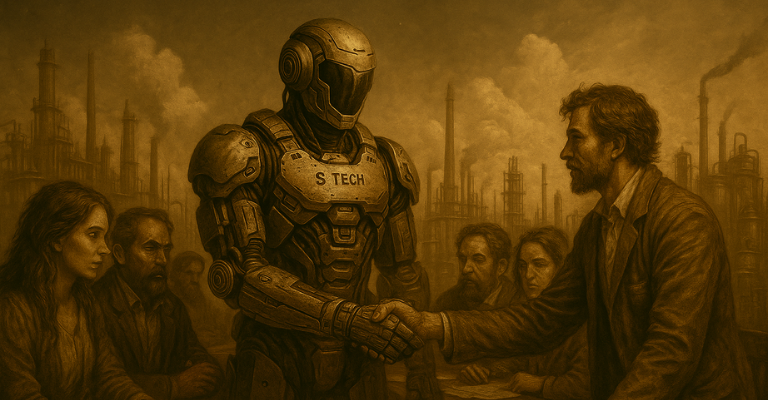
Contrary to concerns that AI would eliminate outsourcing benefits, it’s actually enhancing them. Companies save 50-70% on development expenses by outsourcing instead of hiring locally, and AI is amplifying these savings.
The AI-Outsourcing Synergy:
Multiplied Cost Advantages: Offshore developers using AI tools deliver Western-quality output at emerging market rates, maximizing value.
Faster Delivery: Time zone differences combined with AI-accelerated development create near-continuous progress cycles.
Access to AI Expertise: Many outsourcing destinations have invested heavily in AI education and tools, providing access to specialized expertise.
Risk Mitigation: Outsourcing partners absorb the cost and complexity of AI tool implementation, training, and process development.
Scalability: AI-enabled offshore teams can scale faster than in-house teams, handling variable workloads efficiently.
Evaluating AI Maturity in Outsourcing Partners
Not all outsourcing companies have adapted to AI-augmented development. Assess their capabilities:
Red Flags:
Green Flags:
The best outsourcing partners in 2025 combine cost advantages with AI-enabled productivity, delivering speed and quality previously impossible.
Record Demand Despite Automation Fears
Here’s the surprising reality: despite AI automation concerns, demand for software developers has never been higher. Software developer employment is projected to grow 17.9% from 2023 to 2033 – much faster than the 4% average for all occupations.
Why Demand Keeps Growing:
AI Creates New Work: Every AI implementation requires software developers to build, integrate, maintain, and optimize AI systems.
Expanding Digital Transformation: Organizations across industries continue digitizing operations, creating insatiable demand for software expertise.
AI Infrastructure Needs: Database administrators and architects are needed to set up and maintain complex data infrastructure for AI systems.
Skills Evolution Faster Than Automation: Required skills evolve faster than AI can automate them, creating persistent demand for human expertise.
The Shortage Reality:
AI talent demand exceeds supply by 3.2 to 1 globally. Companies face fierce competition for qualified developers, particularly those with AI expertise. 67% of CEOs report it takes more than four months to hire top engineering talent, and 88% find it difficult to attract talent through traditional channels.
AI roles command 67% higher salaries than traditional software positions, with 38% year-over-year growth across all experience levels. This premium reflects the severe shortage and critical business value of AI-capable developers.
Regional Variations:
Implications for Hiring:
The talent shortage means businesses must be strategic about where and how they hire. Geographic flexibility, competitive compensation, and compelling work environments are essential for attracting quality developers.
Over half of employers say emerging tech like AI and automation has redefined the skills they need on teams. Companies that clearly articulate how they use AI to enhance (not replace) developers attract better candidates.
Building Teams for Long-Term Success
The AI landscape evolves monthly. Technologies, tools, and best practices that work today may be obsolete in 18 months. Building resilient teams requires thinking beyond immediate needs.
Principle 1: Hire for Adaptability Over Specific Skills
Developers who demonstrate continuous learning, rapid tool adoption, and flexibility with new technologies will thrive regardless of how AI evolves. Those committed to specific languages or frameworks will struggle as the landscape shifts.
Evaluation Criteria:
Principle 2: Build AI-First Culture
Organizations that treat AI as an afterthought or threat will fall behind those embracing it as a core capability. Create environments where AI augmentation is expected, celebrated, and continuously improved.
Cultural Elements:
Principle 3: Balance AI Leverage with Human Judgment
The goal isn’t maximum AI usage – it’s optimal combination of AI efficiency and human insight. Developers who blindly accept AI output without critical evaluation create technical debt and security vulnerabilities.
Best Practices:
Principle 4: Invest in Continuous Upskilling
AI capabilities advance monthly. Static training programs become obsolete quickly. Leading organizations implement continuous learning systems that evolve with the technology.
Effective Approaches:
Principle 5: Strategic Partnerships Over Pure In-House
Few organizations can maintain cutting-edge AI capabilities purely in-house. Strategic partnerships with development companies at the forefront of AI implementation provide access to expertise, tools, and best practices impossible to develop internally.
Partnership Benefits:

For Business Leaders:
Are we hiring for AI-augmented capabilities or traditional coding? If job descriptions don’t mention AI tools and skills, you’re already behind.
Do our development partners demonstrate AI maturity? Can they articulate specific AI usage, productivity improvements, and quality processes?
Are we paying for human judgment or commodity coding? If you’re paying premium rates for work AI can handle, reassess your hiring strategy.
How are we measuring AI impact on development productivity? Without metrics, you can’t optimize or identify opportunities.
Are we positioning AI as enhancement or threat to our team? Cultural messaging determines adoption success or resistance.
For Development Teams:
Am I actively using AI tools daily, or resisting them? Resistance guarantees obsolescence; strategic adoption creates competitive advantage.
Can I validate and improve AI-generated code? This skill separates AI power users from those who struggle.
Am I developing skills AI can’t replicate? Focus on problem-solving, architecture, business acumen, and human skills.
Do I understand the business context of my work? Technical excellence without business understanding becomes less valuable as AI handles pure coding.
Am I continuously learning, or relying on existing skills? In the AI era, continuous learning is the only viable strategy.
AI is reshaping tech hiring, but the transformation creates opportunities for those who understand and adapt to the changes. The data is clear: software developer employment is growing robustly, demand far exceeds supply, and salaries continue rising – especially for those with AI skills.
The winners in this transformation aren’t those with the most experience or the newest AI tools. They’re organizations and individuals who strategically combine human judgment with AI capabilities, understand which tasks to automate versus which require human insight, and maintain adaptability as the landscape continues evolving.
For businesses building development teams, the imperative is clear:
Hire for AI-augmented problem-solving, not just coding ability. Evaluate candidates on how they leverage AI tools, not whether they can write every line of code manually.
Partner with development companies demonstrating AI maturity. Companies at the forefront of AI adoption deliver faster, more cost-effectively, with higher quality than competitors using traditional approaches.
Build cultures that embrace AI as enhancement, not threat. Organizations positioning AI as augmentation attract better talent and achieve higher productivity than those treating it as replacement.
Stay flexible and continuously adapt. The AI landscape evolves monthly; rigid strategies become obsolete quickly.
The businesses thriving in 2025 aren’t waiting for AI disruption to settle – they’re actively leveraging it for competitive advantage. The question isn’t whether AI will transform your development processes – it’s whether you’ll lead or follow this transformation.
Ready to find development partners with proven AI capabilities? Our research team has evaluated software development companies based on their AI tool adoption, productivity improvements, and delivery quality. Get detailed assessments to find partners delivering the speed, quality, and cost-effectiveness that AI-augmented development enables.