Header — TechRadiant Floating Pill
Top Healthcare Technology Companies 2026 — TechRadiant
Research-verified · Human-curated · Updated June 2026

Explore Healthcare Technology
Companies, Solutions & Reports

Healthcare software, AI applications, telemedicine platforms, EHR systems, and medical device development — explored through verified rankings, emerging trends, and clinical intelligence shaping the future of digital health.

Zero paid placements · Every firm human-verified · HIPAA · FDA · ONC · FHIR evaluated · Ranked quarterly
Trusted by teams at
Epic Systems
Oracle Health
athenahealth
MEDITECH
Philips Healthcare
Siemens Healthineers
GE HealthCare
Medtronic
Veeva Systems
Change Healthcare
Teladoc Health
Nuance (Microsoft)
Doximity
Abbott
Becton Dickinson
IBM Watson Health
Epic Systems
Oracle Health
athenahealth
MEDITECH
Philips Healthcare
Siemens Healthineers
GE HealthCare
Medtronic
Veeva Systems
Change Healthcare
Teladoc Health
Nuance (Microsoft)
Doximity
Abbott
Becton Dickinson
IBM Watson Health
All live healthcare reports

9 verified healthcare technology reports —
every link is live

Each report covers 10 firms evaluated against clinical and compliance criteria that generic directories do not measure. Click any report to read the full rankings and buyer guidance.

🏥
Live
Top Healthcare Software Development Companies
Firms building EHR systems, telemedicine platforms, patient portals, RPM tools, and hospital information systems with HIPAA as a baseline engineering standard.
10 companies HIPAA · HL7 · FHIR $660B+ market
Read report →
🔒
Live
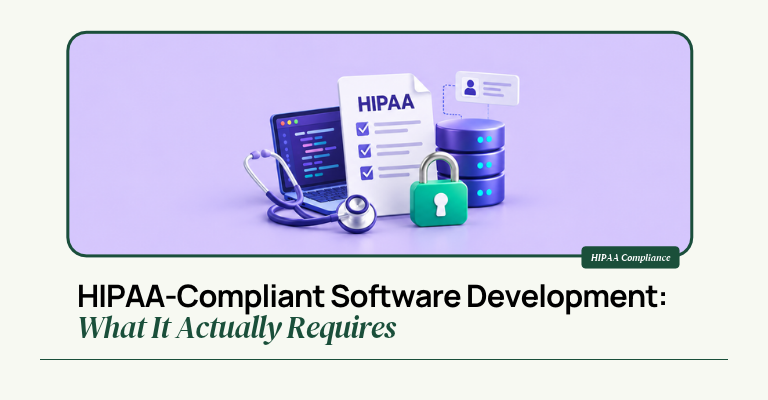
Top HIPAA-Compliant Software Development Companies
Firms treating compliance as engineering discipline — covering all 4 penalty tiers, real OCR enforcement cases, and the 6 technical requirements beyond signing a BAA.
10 companies Up to $2.19M/violation BAA required
Read report →
📱
Live
Top Healthcare App Development Companies
Firms building patient-facing iOS and Android apps, telemedicine, chronic disease management, RPM and wearable apps — with cost ranges for all 8 healthcare app types.
10 companies $62.5B mHealth market iOS · Android · Web
Read report →
🤖
Featured
Top Healthcare AI Development Companies
Firms building diagnostic imaging AI, ambient documentation, clinical decision support, AI revenue cycle agents, and drug discovery — with FDA SaMD experience and PCCP capability.
10 companies $50–56B market 1,451 FDA devices
Read report →
🎥
Live
Top Telemedicine App Development Companies
Production-grade telehealth platforms — not just video call apps. Covers 6 failure modes, the 2026 tech stack, and January 2026 Medicare telehealth regulatory changes.
10 companies $286B US market by 2030 HIPAA · DEA · FHIR
Read report →
📋
Live
Top EHR / EMR Development Companies
Custom EHR systems, Epic integrations, and Cerner migrations — with an honest EHR vs EMR distinction, decision framework, and the Oracle DSTU2 retirement (December 2025).
10 companies $63.85B market by 2030 FHIR R4 · ONC · HL7
Read report →
🩺
Live
Top Medical Device Software Development Companies
Firms with real FDA 510(k), De Novo, and PMA experience — covering IEC 62304 classes, FDA QMSR (February 2026), and PCCP for AI/ML devices.
10 companies IEC 62304 · ISO 13485 QMSR Feb 2026
Read report →
🎨
Live
Top Healthcare UI/UX Design Agencies
Agencies treating healthcare UX as a clinical safety discipline — alert fatigue design, IEC 62366 human factors, patient portal accessibility, and trauma-informed mental health UX.
10 agencies IEC 62366 · WCAG 2.2 FDA HFE
Read report →
🌐
Live
Top Healthcare Web Development Companies
HIPAA-compliant websites, patient portals, telemedicine platforms, and healthcare SaaS — with cost ranges for 8 web project types and EHR integration guidance.
10 companies 84% patients check online first HIPAA · ADA · WCAG 2.2
Read report →
📢
Coming soon
Top Healthcare Marketing Agencies
Agencies specialising in patient acquisition, healthcare SEO, medical practice growth, health system branding, and HIPAA-compliant digital advertising — in research.
10 agencies In research
In research →
AI in healthcare

The role of AI in healthcare technology
where it's deployed and what it changes

AI is no longer experimental in healthcare. It is in clinical deployment across diagnostics, documentation, drug discovery, and care operations — with a $50–56 billion market in 2026 growing at 38–44% CAGR. Here is where it is actually being applied.

🩻
Diagnostic imaging AI
Radiology, pathology, and dermatology AI flagging critical findings — stroke, pulmonary embolism, cancer — for clinician review. The most mature FDA-cleared category: 76% of all 1,451 cleared AI devices are radiology products.
1,100+ FDA-cleared devices
🎙️
Ambient clinical documentation
Generative AI that listens to doctor-patient conversations and automatically produces structured SOAP notes, ICD-10 codes, and billing documentation — reducing clinician charting time by 40–60%. The fastest-growing enterprise healthcare AI application in 2026.
Fastest-growing category 2026
💰
AI revenue cycle management
AI agents automating prior authorisation, medical coding, claims submission, and denial management — reducing administrative cost and accelerating reimbursement. 288 new CPT codes for digital health services were added in 2026.
288 new CPT codes 2026
🧬
Precision medicine & oncology AI
AI platforms combining molecular and clinical data to guide treatment decisions, match patients to clinical trials, and quantify biomarkers in pathology slides. The precision medicine AI segment generates $1.27 billion in revenue, growing 83% year-over-year.
$1.27B · 83% YoY growth
🤖
Autonomous clinical AI agents
Multi-step AI agents handling patient follow-up communication, post-discharge care coordination, and complex administrative workflows with clinical escalation when needed. The fastest-growing new deployment category in 2026, driven by healthcare staffing shortages.
Emerging · High growth
💊
AI drug discovery
AI-designed compounds now in Phase III clinical trials — the definitive test of whether AI genuinely improves the historically low success rate of drug development pipelines. Multiple AI-designed molecules entered late-stage trials in 2025–2026.
Multiple compounds in Phase III
Standards TechRadiant evaluates every healthcare firm against
8 clinical and regulatory standards that separate genuine healthcare technology firms from generalists
HIPAA / HITECH
US PHI protection — mandatory for all software handling patient data. Penalties up to $2.19M per violation per year.
HL7 / FHIR R4
Healthcare data exchange standard. FHIR R4 mandated under the 21st Century Cures Act for patient data access.
FDA QMSR
Replaces 21 CFR 820 from February 2, 2026 — incorporates ISO 13485:2016 by reference. Applies to all medical device software.
IEC 62304
Medical device software lifecycle standard — Class A, B, and C safety levels. Required for all SaMD FDA submissions.
ISO 13485
Quality management for medical devices. Now incorporated into FDA QMSR. Global standard for device manufacturers worldwide.
IEC 62366
Human factors engineering for medical device UX — formative and summative usability studies required for FDA SaMD submissions.
ONC / 21st Cures Act
ONC certification, Information Blocking Rule, FHIR patient access. Up to $1M per violation for health IT developers.
WCAG 2.2 / ADA
Accessibility compliance — EU mandate from June 2025. US ADA lawsuits against healthcare websites rose 35% in 2024.
Not sure which compliance frameworks apply to your healthcare project? Get guidance — 48 hours
TechRadiant resources

Guides & articles to help you
make better healthcare technology decisions

Research reports, industry breakdowns, and practical guides — written to simplify complex technology decisions.

Healthcare Technology — FAQ & Guidance | TechRadiant
Frequently asked questions

Healthcare technology buyer questions —
answered at the vertical level

Healthcare technology — also called health IT or digital health — covers all software, AI, devices, and digital infrastructure used to deliver, manage, or improve healthcare. It includes electronic health records, telemedicine platforms, AI diagnostic tools, medical device software, patient portals, remote patient monitoring, and hospital management systems. The global digital health market is valued at $323.87 billion in 2026, growing toward $1.26 trillion by 2033 at 21.4% CAGR. What distinguishes healthcare technology from general software is the combination of strict regulatory compliance (HIPAA, FDA, ONC), patient safety implications, and the requirement to integrate with existing clinical infrastructure.
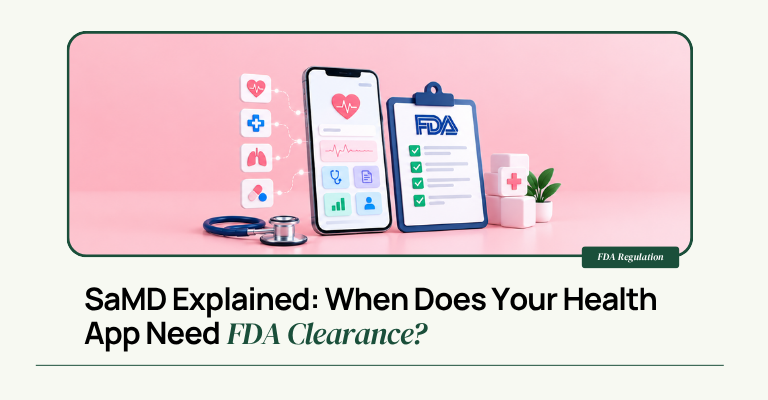
Five significant changes in 2026: FDA QMSR (February 2, 2026) — replaced 21 CFR 820, incorporating ISO 13485:2016. Oracle Health retired DSTU2 (December 2025) — all EHR integrations must now target FHIR R4. Medicare telehealth rural reversion (January 31, 2026) — most services reverted to rural-only rules; mental health remains home-accessible. EU AI Act high-risk obligations (August 2026) — medical AI in Europe faces new conformity requirements. FDA PCCP final guidance (August 2025) — enables AI/ML medical devices to update algorithms post-clearance without new submissions.
In clinical deployment across six areas in 2026: Diagnostic imaging AI — 76% of FDA-cleared AI devices, flagging stroke, cancer, and pulmonary embolism. Ambient documentation — reducing clinician charting time 40–60%. Precision medicine — $1.27B in revenue, 83% YoY growth. Revenue cycle agents — automating prior auth, coding, and claims. Autonomous clinical agents — multi-step care coordination and follow-up. Drug discovery — AI-designed compounds now in Phase III trials. The healthcare AI market is projected at $50–56 billion in 2026, growing at 38–44% CAGR.
HIPAA (Health Insurance Portability and Accountability Act) governs the privacy and security of Protected Health Information (PHI) in the US. Any software that stores, transmits, or processes PHI must be HIPAA-compliant — requiring AES-256 encryption, role-based access controls with MFA, immutable audit trails, and a signed Business Associate Agreement (BAA) with every vendor handling PHI. Civil penalties reach $2.19 million per violation category per year (2026 inflation-adjusted cap). Healthcare data breaches average $7.42 million per incident — the highest of any industry for 14 consecutive years.
TechRadiant evaluates healthcare firms on: HIPAA compliance depth (not self-reported — verified through process and case study review), EHR integration track record (working integrations, not theoretical FHIR familiarity), clinical domain expertise, regulatory experience (FDA, ONC, ISO 13485), and verified patient and operational outcomes — portal adoption rates, diagnostic accuracy, workflow efficiency gains. Ranking positions are never for sale. Reports are reviewed quarterly. Share your project and we'll match you to the right firm within 48 hours.
An EMR (Electronic Medical Record) is a digital chart within a single practice — data stays in the organisation and is not designed to travel with the patient. An EHR (Electronic Health Record) follows the patient across multiple providers, hospitals, labs, and specialists — built to share data via FHIR R4 APIs and HL7 interfaces. EHRs require ONC certification for US Medicare/Medicaid billing and must comply with the Information Blocking Rule. Under current US law, withholding patient data that could reasonably be shared is a compliance violation — building EMR-only systems creates regulatory exposure. See our EHR/EMR Development report for the full decision framework.
Free matching service

Not sure which healthcare technology firm
is right for your project?

Share your requirements — our research team will match you to verified firms by project type, budget, compliance needs, and tech stack. Free. No obligation. Response within 48 hours.

Share your project →