The conversation has changed. Five years ago, a business approaching a software agency would typically ask for a web app, a mobile app, or a specific workflow tool. The feature list was functional: user login, a dashboard, some reports, maybe a payment integration.
In 2026, the brief is more ambitious and more technically specific. Businesses arrive with requirements like "we need it to integrate with our existing CRM, ERP, and three legacy systems, include AI-driven recommendations, scale to 10,000 concurrent users, and meet our SOC 2 compliance requirements." The shift is not just in what businesses want — it is in how clearly they now articulate the architecture they expect.
This is partly because AI-assisted development has changed what is buildable in a given timeframe and budget. But it is also because businesses have spent years using SaaS tools that imposed limitations, and they know exactly which constraints they want to eliminate when they build their own. Understanding what features businesses are requesting — and what those requests actually require — is essential for any business planning a custom software investment in 2026.
Why are businesses moving from SaaS to custom software — and what is driving the shift?
The SaaS replacement trend documented in Retool's 2026 Build vs. Buy report is not about dissatisfaction with cloud software. It is about a fundamental change in the economics and speed of custom development, combined with the accumulated limitations of using products built for the average customer rather than for a specific business's workflows.
According to Retool's survey of 817 professionals spanning engineering, operations, product, finance, and marketing roles, the SaaS categories under the most replacement pressure are workflow automations and internal admin tools — followed by CRMs, BI tools, project management platforms, and customer support tools. These are all categories where a business has specific logic, specific integrations, and specific data requirements that a standard product handles imperfectly.
"As large language models have improved and AI-assisted development has become widespread, enterprises can now build custom tools in days rather than months. The build vs. buy equation has shifted significantly."
The financial calculation has also changed. When per-seat SaaS licensing scales with headcount, the cost of a mature SaaS tool across a 500-person organization can exceed the amortized cost of a custom-built alternative within two to three years. Combined with AI-assisted development reducing build timelines by 30–55%, the break-even point has moved dramatically in favor of building custom for any workflow that is core to the business.
What are the 9 most-requested features in custom software projects in 2026?
Based on TechRadiant's analysis of custom software development projects across our verified agency network, combined with published survey data from Retool, Goodfirms, and Keyhole Software, these are the features appearing in virtually every significant custom software brief in 2026.
AI and machine learning integration
The single most requested feature in custom software projects in 2026. Businesses are not asking for AI as a bolt-on — they are asking for systems architected around AI from the start. The specific requests vary: some want intelligent automation that handles workflow exceptions without human input, others want predictive analytics embedded in their operational dashboards, and others want natural language interfaces that let non-technical users query complex data in plain language. According to Goodfirms' 2026 survey, 90.6% of development companies now build AI capabilities into projects as a standard part of the delivery.
Third-party API and system integration
Almost no custom software project in 2026 exists in isolation. Businesses arrive with an existing technology stack — a CRM, an ERP, a payment platform, a logistics system, a data warehouse — and they need the new software to connect with all of it reliably. API-first architecture, where systems are designed around APIs as the primary interface rather than as an afterthought, is the standard approach because it enables the new software to communicate with current systems and any future additions without architectural rework each time.
Cloud-native architecture and elastic scalability
Businesses in 2026 are not willing to commission software that requires manual infrastructure intervention to handle growth. Cloud-native architecture — using microservices, containers, and serverless functions — means the system scales automatically under load and scales back down to reduce costs when demand is lower. This is the default expectation for any platform expected to handle variable user volumes, whether that is a customer-facing product or an internal tool used across a growing organization. Flexera's 2025 State of the Cloud Report confirms that hybrid cloud strategies are now mainstream, and businesses expect cloud-native architecture as a baseline rather than a premium.
Real-time data processing and analytics dashboards
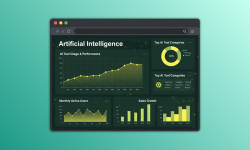
The era of overnight batch reports is over for most business functions. Businesses requesting custom software in 2026 want live operational visibility — dashboards that reflect the current state of their business, not yesterday's. This encompasses real-time inventory levels, live sales pipeline data, instant fraud signals, and operational metrics that update as events occur. The technical underpinning is event-driven architecture combined with real-time data ingestion — systems that process and surface data as it is generated rather than on a scheduled refresh cycle.
Security-by-design and zero-trust architecture
Security is no longer a phase at the end of development — it is the foundation. In 2026, businesses are explicitly requesting zero-trust architecture (every request is continuously authenticated regardless of its origin), end-to-end encryption for all data in transit and at rest, and secure API design with OAuth authentication and rate limiting built in from day one. This shift is driven by the increasing volume of regulatory requirements — GDPR, HIPAA, SOC 2, the EU AI Act — and by the reality that security retrofitted after launch is significantly more expensive than security built into the original architecture.
Find verified custom software agencies that have delivered projects with the exact features your business needs
TechRadiant verifies agencies on domain track record, team depth, and real client outcomes. Share your requirements and get a curated shortlist in 48 hours.
Role-based access control and granular permissions
As custom software replaces SaaS tools across more business functions, the organizations using it become more diverse — finance teams, operations, customer success, external partners, and executives all accessing the same platform with fundamentally different needs and data rights. Granular RBAC — where permissions are defined at the feature, record, and data-field level rather than at a broad user-tier level — is now a standard request rather than a premium feature. Businesses have learned, often through experience, that a platform where all users see all data is a compliance risk and an operational friction point.
Mobile-first and cross-platform design
The majority of business software interactions in 2026 happen on mobile devices — field teams, remote workers, and executives frequently access operational software from their phones rather than from a desktop. Businesses are requesting mobile-first design as a baseline: interfaces that work flawlessly on small screens before being adapted for desktop, rather than desktop applications scaled down as an afterthought. Progressive Web App (PWA) architecture — which delivers a native-quality mobile experience through a browser without requiring a separate app store submission — is increasingly preferred because it reduces development and maintenance overhead versus maintaining separate iOS, Android, and web codebases.
Workflow automation and business process orchestration
One of the primary reasons businesses move from SaaS to custom software is to automate workflows that off-the-shelf tools cannot handle without expensive workarounds. Custom workflow automation means encoding proprietary business logic — specific approval hierarchies, conditional routing rules, multi-system triggers, and exception handling — directly into the software architecture. This is distinct from basic automation tools: it is business process orchestration that reflects exactly how a specific organization operates, not how the average organization in its category operates.
Custom reporting, BI dashboards, and data export
The reporting and analytics capabilities of most SaaS tools are a persistent frustration for business users — they surface what the product vendor considers useful, not what the specific business needs to make decisions. Custom reporting is consistently among the top reasons businesses commission custom software: the ability to define exactly which metrics matter, how they are calculated, what time periods and filters apply, and how the data can be exported for use in other systems. In 2026, this increasingly includes embedded BI — analytics capabilities that are built into the operational software rather than requiring a separate analytics platform.
How does choosing the right development partner affect whether these features are delivered correctly?
Every feature on this list is technically achievable. The variable is not capability — it is whether the development partner has the experience to scope, architect, and deliver each feature correctly within a defined budget and timeline.
The most common failure patterns TechRadiant sees in custom software projects that go over budget or underperform are not caused by the features themselves. They are caused by inadequate discovery before development begins, development partners who agree to every requirement without challenging feasibility, and integration requirements that were vague in the brief but expensive in the build.
- No formal discovery phase — the agency moved directly from requirements to a development contract without a structured scoping session and written specification
- Integration requirements listed as "connect with our existing systems" without naming every system, mapping data flows, and confirming API availability
- AI features requested without a defined data source, training set, or success metric — "AI-powered recommendations" without specifying what data feeds them and what they optimize for
- Security and compliance requirements not discussed until after the architecture is designed — making them a retrofit rather than a foundation
- No change-request process defined in the contract — meaning every new feature request mid-project is treated as an informal addition that quietly inflates scope
- Reporting requirements left as "we'll define those later" — a guaranteed source of post-launch rework when the data model does not support the reports the business actually needs
What do these features actually cost — and how has AI changed the budget equation?
Custom software pricing in 2026 has been significantly reshaped by AI-assisted development. According to Goodfirms' survey of 100+ global development companies, 61% expect AI to reduce project budgets by 10–25% compared to traditional development timelines. GitHub Copilot users report writing code 55% faster, and automated testing tools are compressing QA cycles that previously consumed 20–30% of project budgets.
| Project scope | Typical features included | Budget range (2026) | Timeline | Agency match |
|---|---|---|---|---|
| Simple internal tool | Workflow automation, RBAC, basic reporting, 1–2 integrations | $30K – $80K | 6–12 weeks | Custom software agencies |
| Mid-complexity platform | AI features, multiple integrations, real-time dashboards, mobile, RBAC | $80K – $150K | 3–6 months | Custom software agencies |
| AI-enabled platform | Custom AI/ML models, advanced integrations, cloud-native architecture, compliance | $100K – $200K | 4–8 months | AI development agencies |
| Enterprise platform | All of the above + multi-tenant architecture, advanced security, regulatory compliance, dedicated infrastructure | $200K+ | 6–18 months | Enterprise software agencies |
The frequently overlooked cost is maintenance. ScienceSoft's research indicates that ongoing maintenance typically runs 15–20% of the original development cost annually. A $100,000 custom platform carries an expected maintenance cost of $15,000–$20,000 per year — covering bug fixes, security updates, dependency management, and incremental feature additions. This should be factored into the total investment calculation from the outset, and ideally contracted with the development partner before go-live.
- A complete list of every system that needs to integrate, with confirmation of whether APIs exist or need to be built
- A permission matrix defining every user role and their access rights before architecture begins
- Specific AI use cases with named data sources and defined success metrics — not just "AI-powered"
- Reporting requirements documented before the data model is designed, not after it is built
- Peak load and user volume estimates to inform cloud architecture decisions and cost-at-scale modeling
- Compliance and security requirements — GDPR, HIPAA, SOC 2, or industry-specific — listed explicitly in the brief
- A post-launch maintenance and support requirement included in the contract before development begins